
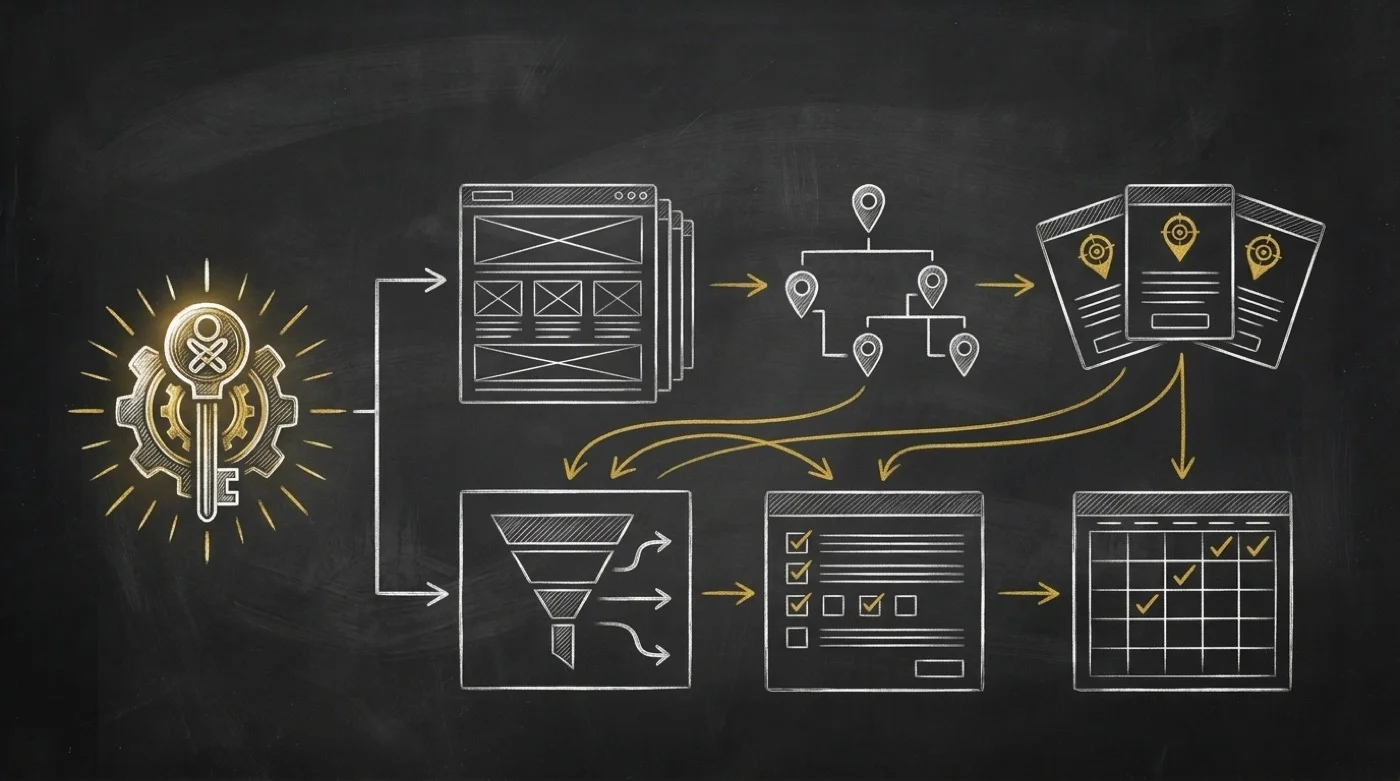
I lost another Sunday night wiring five browser tabs together. My offer was ready. My outbound list was clean. My copy was written and approved. Still, nobody could book a call with me yet. My landing page lived in one dashboard. My lead form sat in a second app. My funnel rules ran in a third tool. My booking calendar lived in a fourth. By midnight, one webhook broke and dropped my test leads.

Traditional website tools were built for human mice, not AI agents.
Every real campaign you run needs more than a brochure site. Your visitors expect landing pages, search directories, and personalized offers. You also need branching funnels, human forms, and calendar booking. For years, I thought you only had two bad choices. Either I lost my nights gluing five human tools together. Or I paid a web agency a monthly retainer. Then I waited weeks for every single funnel change. Even when I gave my agent a classic CMS, it stalled. Human drag-and-drop editors blocked me cold. Or my agent wrote fragile custom code from scratch.

Give your agent a headless CMS built natively for agents
I built SpiderPublish on SpiderIQ to fix that bottleneck for good. Then I packaged @spideriq/publish-skills on OPVS for your agent. Now your agent owns the whole web stack in one chat. You stop gluing page builders to separate form and calendar apps. Instead, you tell your agent what surface you want live. I recorded a 59-second walkthrough on the Publish Skills page so you can watch my full loop.
One skill (spiderpublish) drives 172 HTTP methods across SpiderIQ. A single SPIDERIQ_PAT credential scopes every call per brand. SpiderPublish splits the runtime cleanly into three layers. Content rows live tenant-isolated in PostgreSQL. Liquid templates sit in per-tenant KV at the Cloudflare edge. When I publish pages, posts, docs, or press releases, they go live fast. Edge cache clears in about 60 seconds with no build step. When your agent edits Liquid theme chrome, edge deploys take 2 to 5 seconds. You never maintain a per-client npm build.

Four revenue surfaces from one stocked marketplace
Agents fail when you force them to invent layouts from zero. So I enforced a four-rung template-first ladder inside @spideriq/publish-skills. First, my agent searches a built-in marketplace of proven kits. It pulls whole-site starters, page templates, conversion blocks, and background videos. Only after checking stocked templates does my agent touch raw blocks.
Full websites, blogs, docs, and newsrooms. One workspace holds multiple independent websites via
proj_...IDs. Your agent connects custom domains through the Cloudflare SaaS API. I use it to ship block pages, blog posts, OpenAPI docs, and Shadow-DOM components. It also runs custom collections, first-party CDN media, and a/pressnewsroom. My agent drafts releases, manages press contacts, and builds ZIP kits there.Programmatic SEO directories from live business data. You stop paying developers per directory template. My agent imports normalized SpiderIQ business rows with
directory_import_from_idap. SpiderPublish renders category, per-city, and per-business pages automatically. Server-side SEO titles andsitemap.xmlentries ship out of the box.Hyper-personalized landing pages per prospect. Sending cold outreach traffic to one generic page wastes replies. With
dynamic_landingpages, I author one page template once. SpiderPublish serves/lp/{page_slug}/{identifier}per prospect at request time. Live business and contact fields resolve into{{ lead.* }}merge tags. Zero duplicate per-prospect rows get stored.Branching funnels, human forms, and live booking. My agent clones validated funnel starters with
applyFunnelTemplate. Next, it wires A/B split tests and conditional routing edges. Then it publishes conversational lead forms (kind='form', six visual presets). I also ship appointment booking flows (kind='booking') at/f/<flow_id>with cal.com slots and staff calendar OAuth-by-invite. You can even embed a hired OPVS agent inside an open Shadow root (kind='agent').
Safety gates and visual checks before anything ships
Handing live websites to an autonomous agent without guardrails is risky. A wrong tenant ID can write onto the wrong brand's site. A wrong block field name stores at HTTP 200 and renders blank.
That is why I built strict gates into @spideriq/publish-skills itself. Before writing, my agent calls get_auth_status to verify exact tenancy. Deletes, theme swaps, settings edits, and deploys require dry_run: true first. The API returns a preview and a snapshot-bound confirm_token. After every publish or deploy, my agent runs content_visual_check live. I check dom.shadow_hosts to prove forms, components, and agents rendered cleanly.

What changes when your agent runs the web stack
My launch rhythm changed once I dropped five disconnected subscriptions. I no longer spend weekends copying embed codes across dashboards. I no longer wait weeks in external agency queues either. I hand my agent one plain brief and inspect the preview. Pages, directories, /lp/ prospect routes, funnels, and booked calls ship together.
Watch my 59-second launch film and browse all 172 methods at opvs.ai/skills/publish-skills, or track updates on the OPVS changelog.
Live on the marketplace as @spideriq/publish-skills.