
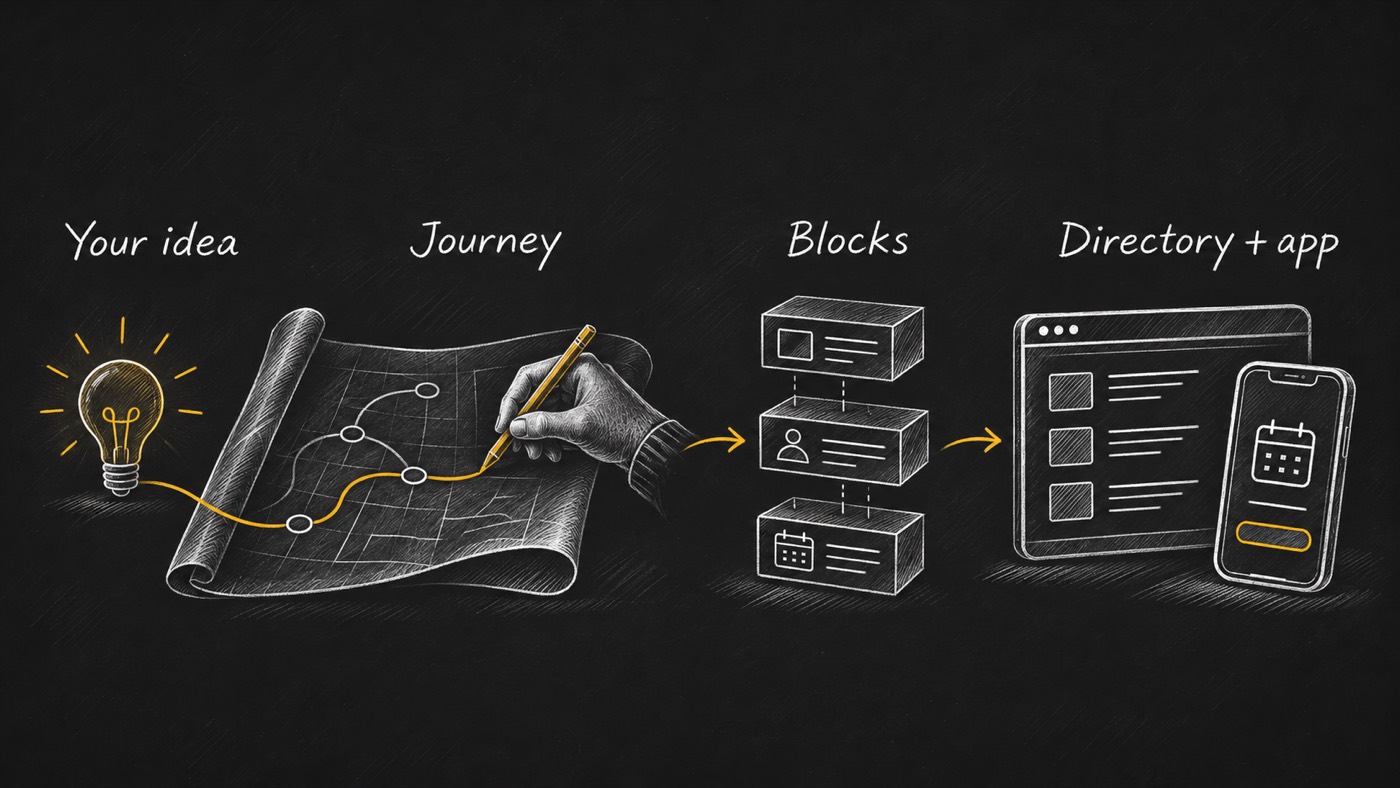
You have a million-dollar idea for a niche startup. A directory helps people find the right business. An app gives the owner a reason to come back and pay. The first useful question is simple: what happens between those two things?
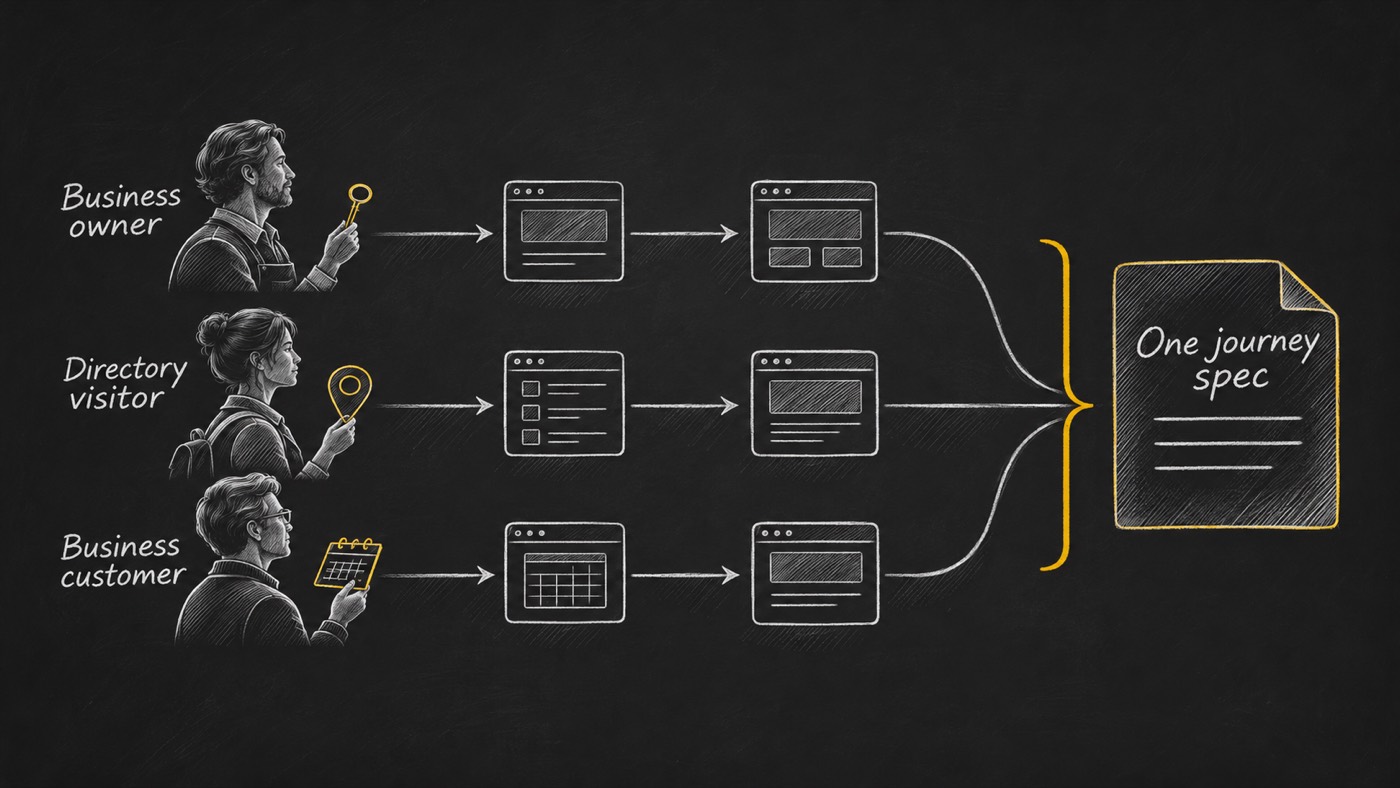
I built app-journey to help you answer it before you build the screens. Version 0.1.0 maps three connected experiences in one document: the business owner, the directory visitor and the business's own customer. You get screen decisions, draft copy, a metric for each step and clear limits on what an agent may do.
Then comes Blocks: the inventory I use to ask which SpiderIQ and OPVS pieces already exist. Map the journey, find the pieces, and give the builder a plan. That is the route from an idea to a directory and app with less work repeated from scratch.
Start with the people who make the business work
Picture a directory for pet groomers. A pet owner finds a nearby salon. The salon owner claims the profile and checks its details. A returning customer asks to book through the salon's website or chat.
Those are three views of the same business. Each needs a clear next step.
The owner needs to know what stays free, what paid tools add and what happens when a trial ends. The directory visitor needs a useful listing and a clear route to contact or request a slot. The salon's customer needs to know whether that request has become a booking.
app-journey puts those paths next to each other. A free profile stays useful. Paid tools have a clear monthly price. An agent hire is a separate, explicit choice. A cancelled plan must account for existing bookings and the customer's next visit.
This gives you something concrete to review before a builder starts work. You can point to a step and ask: does the person have enough information to act?
Turn the journey into a build brief
The output is one JOURNEY-SPEC for your niche. It joins the screen plan, the words people will read, the events you want to measure and the facts still needed from the business.
For the groomer example, a request for Tuesday at ten needs more than a calendar tile. Which service is it? How long does it take? Which staff member can do it? Is the slot held? What happens if the customer changes their mind?
The spec makes space for those answers. If capacity or policy is unknown, that gap stays visible. The builder gets a named decision to resolve instead of a blank that looks finished.
The same discipline applies to the owner journey. A trial screen needs a start point, an end point and a clear account of what changes afterward. A paid screen needs the approved price. A draft can describe the flow while marking the price as an open input.
The skill includes recipes for restaurants, pet grooming and range or class services. Each brings its own resource questions. A table, a groomer's time and a class place have different rules.
Use Blocks to find what you can reuse
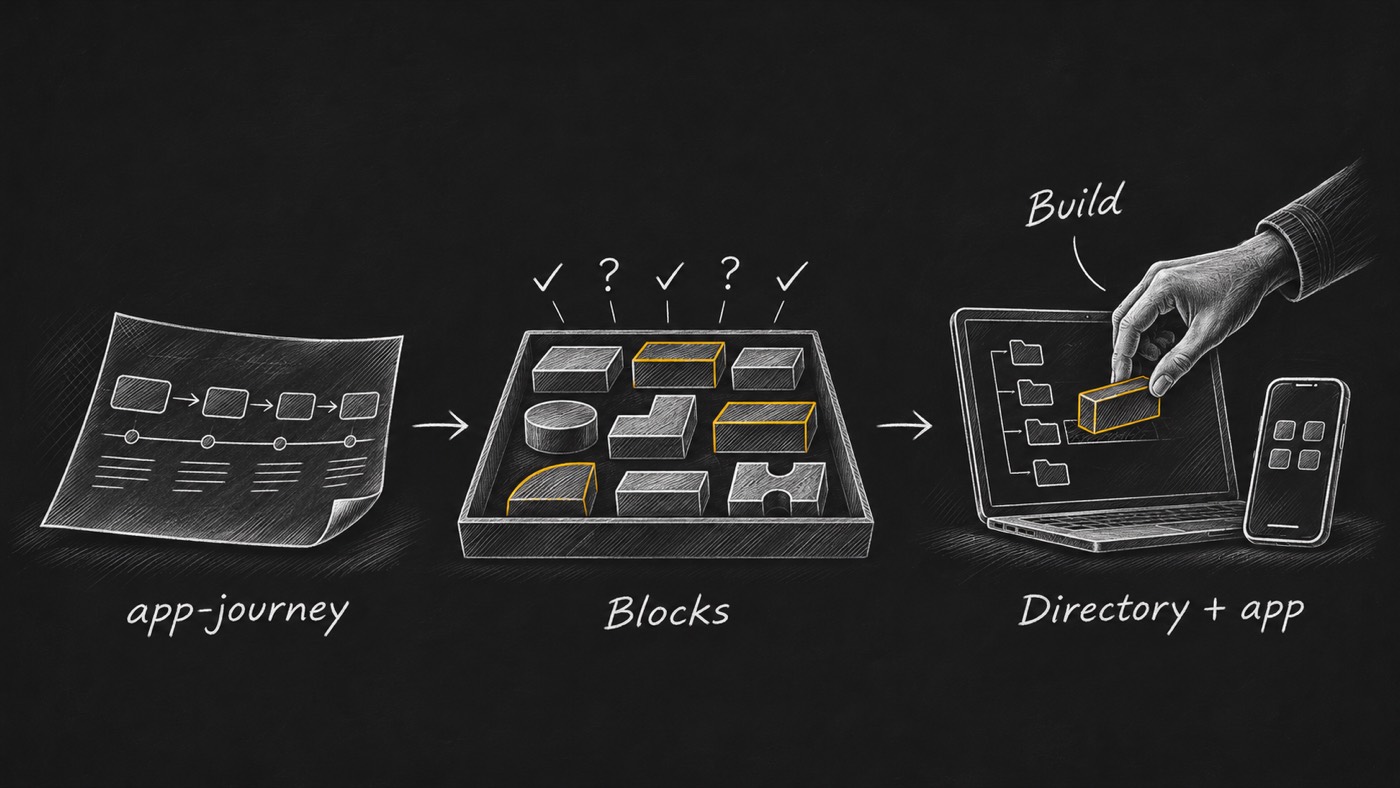
Once the journey is clear, I ask a second question at each step: do I already have a block for this?
Blocks is a catalog of capabilities and their readiness across SpiderIQ and OPVS. It helps a builder find the pieces behind needs such as directory pages, site templates, reusable components, accounts and agent chat. Each record carries its limits and known gaps.
The catalog snapshot I reviewed was built on 21 November 2026. It lists directory pages, themes and reusable site components as live. The records also distinguish working read paths from write flows that still need proof. I use that detail when planning a build.
For a directory, that can mean starting with existing city and business pages. For a client site, it can mean reusing a template and common sections. For an app, it means checking the account, chat and screen capabilities the journey needs before promising them to an owner.
The useful chain is app-journey → Blocks → implementation. app-journey defines the experience. Blocks helps identify available parts. The builder connects and tests those parts for the actual business.
Give the builder one document to work from
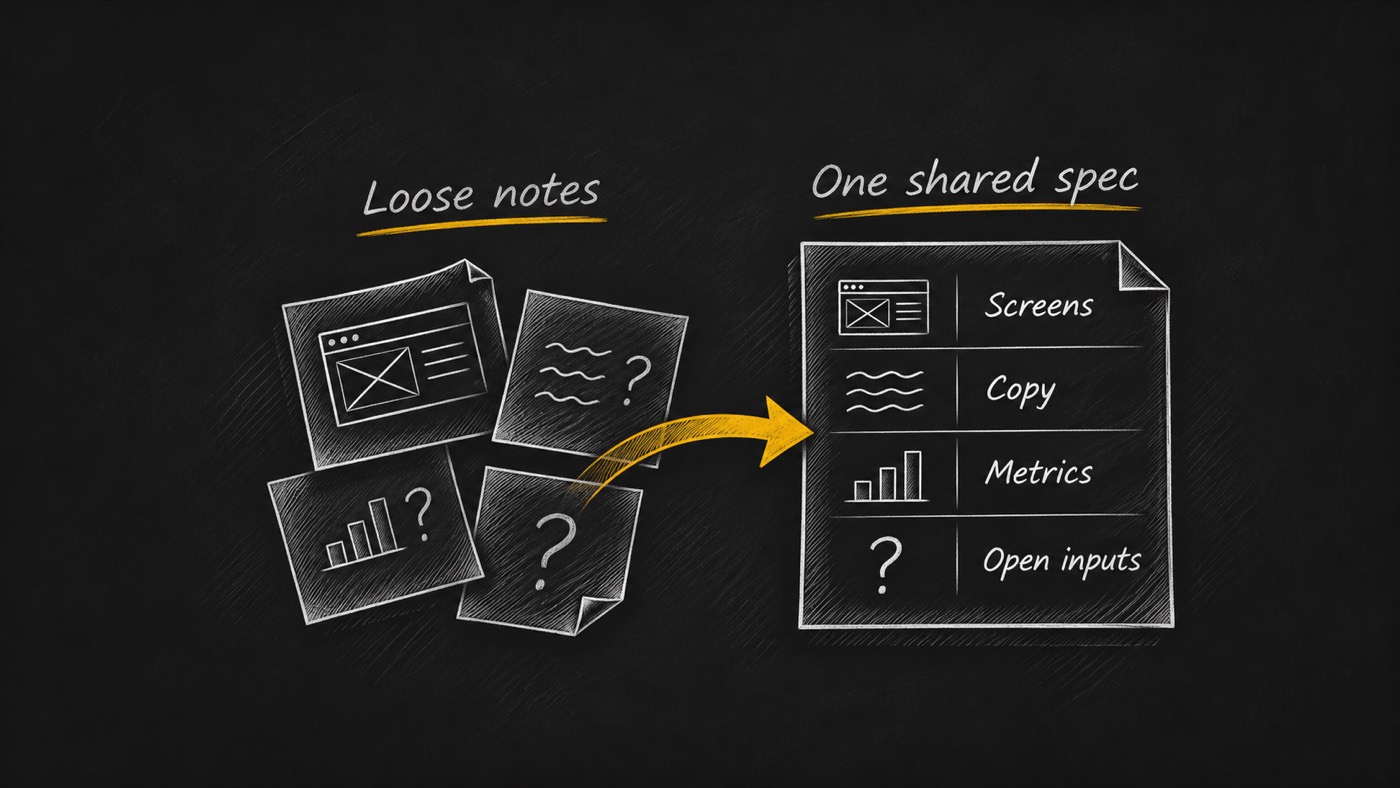
Loose notes spread decisions across chats. A pricing sketch says one thing. A booking mockup says another. The person writing the app has to reconcile both.
I want the handoff to answer four questions in one place: what does the person see, what can they do, what should be measured, and what is still unknown?
app-journey produces that shared document. Its checks look for missing fields and contradictions in the declared facts. The workflow can keep the task on your existing board and save the spec in your verified document project. Your team can review the same revision and return named open decisions to their owners.
That is where reuse becomes useful: the builder can match a specific need to an existing capability, see its limits and focus new work on the gap.
Build toward the ambition, measure the result
A million-dollar business is the ambition. Revenue still depends on the niche, the offer, distribution and how well the product serves people. This release has no measured build-time or conversion result to report.
The current proof is the published skill and its document checks. A real customer run and a hired-agent test are still ahead. Before launch, the business also needs to confirm prices, capacity and policies, test integrations and review public copy in each language.
You can start with a focused decision today: map one niche and make the unknowns visible. Then choose reusable pieces against that plan. Build the first complete path, measure it, and improve it.
Try it
Read app-journey on the OPVS marketplace. The package is @di-atomic/app-journey. Version 0.1.1 adds this launch kit; the skill behavior is unchanged from 0.1.0.
Trigger it with: “Map owner and customer booking journeys for a pet-grooming directory. Show open prices and capacity decisions.”
Bring your business facts. Leave unknowns marked. Use the resulting spec to choose your blocks and brief the build.