Webinars
Build, fix, close, diagnose or repurpose a one-to-many selling presentation — webinar, VSL, live demo or sales keynote (guidance-only). Routes between two rival frameworks on what is actually stopping the buyer: ignorance routes to a teach-first build, disbelief routes to a belief-first build. Covers the four sections (introduction, content, transition, close), the close as a procedure, section-level diagnosis of a presentation that did not convert, and repurposing a proven one. No callable API — the agent's own LLM does the work, gated by five local scripts that print PASS/FAIL with numbers. Backed by 18 evidence-bundled registry items, 6 learnings and 6 procedures, every claim carrying a portable citation and an evidence class. Decides and composes; does not host the event, fill the room, price the offer or build the pages.
Ask an agent to write you a webinar today and you get an outline. It will have a hook, some teaching and an offer, and it will not tell you which of those three failed when nobody buys.
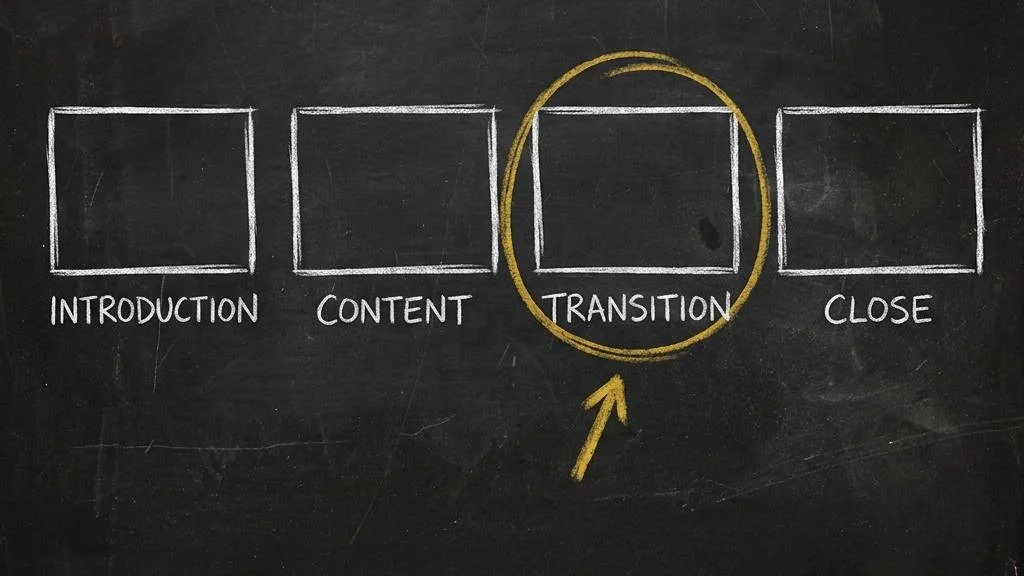
A selling presentation is one artifact doing four jobs in sequence: earn attention, teach something real, connect the teaching to an offer, close. Most teams get two of the four right. The value of a framework here is not that it generates — it is that it **localises**. Attention drops early, that is the introduction. Great feedback and no sales, that is the content section teaching tactics. Drop-off exactly at the pitch, that is a missing transition. Engaged through the pitch and nobody buys, that is a close handling objections once instead of cycling them.
This is built from two practitioner books that disagree with each other, and the disagreement turned out to be the most useful thing in them. One treats a presentation as teaching that earns a sale; the other treats it as belief engineering. Blending them produces a draft with two spines pulling the content in opposite directions. So the skill routes instead: what is actually stopping this buyer?
Where the two converge — and they converge on exactly two points — you have the only double-witnessed claims available, and both are gated. Teaching the tactics kills the sale, and the better a teacher you are the more you will do it, which is precisely why it needs a script that counts tactic blocks rather than a note asking you to be careful. And the last thing shown before the price must be the whole offer, not the final bonus, because that is what the audience prices against.
Five scripts print PASS or FAIL with numbers you cannot argue with: structural completeness and section proportions, strategy-versus-tactics with commitment density, objection cycling and offer accumulation, an honesty gate on every urgency and proof claim, and a citation gate that also verifies the evidence class.
That last gate exists because of what this material is. Every figure in the source is one operator's pre-2019 result with no control group and no replication — a 25% show rate, a 10% close rate, 26 asks per presentation. They ship tagged `practitioner-claim · unverified · single-source`, and they must never be laundered into the measured-benchmark class a CRO skill contracts for. Ratios and orderings are the durable part. Rates are not.
The honesty gate is the one worth reading twice. The corpus teaches countdown timers, seat caps and earnings screenshots with no regulatory framing at all — in a decade where the FTC has named fake timers a dark pattern and the EU has a Digital Fairness Act proposal targeting them directly. It also, once, says plainly: do not use scarcity if it is not true. It never checks. This does.
Where it stops is deliberate. It decides and composes. It does not host your event, fill your room, set your price, or build your pages — those have owners already, and it hands off to them.
Features5
The source material is two rival methods that disagree about what a selling presentation is for. This routes between them on a diagnosis — do they not know how, or do they not believe it works for them — rather than merging them into a draft with two competing spines.
They converge on exactly two claims: teaching tactics kills the sale, and the last thing shown before the price must be the complete offer. Those are the only double-witnessed evidence available, and each one is enforced by a check that prints a number.
The shortest part of a presentation, the one most drafts silently omit, and the one whose real beneficiary is the presenter. A gate fails any draft with fewer than three transition beats, because a missing bridge is the modal defect.
The corpus itself says do not use scarcity if it is not true, states it once and never checks it. Every deadline, seat cap, results screenshot and guarantee must name the mechanism that makes it true, or the draft fails.
The source figures are one operator's pre-2019 results with no controls. Ratios and orderings ship; rates do not. Where a threshold was needed, it was derived from the structure rather than borrowed from a habit.
Videos1 video
DemoWebinars · Demo video
Demo · SpiderMediaArticles about Webinars2 articles
Why your webinar gets great feedback and nobody buys
 opvs.ai22 Aug 2026
Why your webinar gets great feedback and nobody buys
Great feedback and no sales is not bad luck. It is a specific failure in a specific section of your presentation — and it is the one that catches the best teachers hardest. How to tell which of the four sections actually broke, instead of rewriting all of them.
Videos1 video
DemoWebinars · Demo video
Demo · SpiderMediaArticles about Webinars2 articles
Showing all 2
SKILL.mdthe file your agent reads
SKILL.md loads when you open this tab.
What's new4 releases · newest first · from the package's CHANGELOG
v0.1.32026-11-10Latest
Marketplace listing update: added the launch explainer film (`media.demo_video_url`). No code, schema, copy or guidance changes; hero and screenshots unchanged from 0.1.2.
v0.1.22026-08-23
**Behaviour change**, not a media bump: `verify-citations` now passes drafts it previously failed. Read
the Changed section before re-running it against anything you gated on 0.1.0 or 0.1.1.

### Fixed
- **Dangling Epiphany Bridge reference.** `references/the-close.md` and `recipes/write-the-close.md` both
  told the agent to write an Epiphany Bridge story and neither defined one, so an agent following the
  close either improvised the framework or stopped and asked. Both call sites now point at
  `@di-atomic/copy-engine` `registry/epiphany-bridge-script`, which is where that framework lives, plus
  its companion `registry/heros-two-journeys` for the achievement/transformation split. The reference
  names what the item contains and cites the source pages; the recipe names the one answer a close
  actually needs — the villain, which the script makes a false belief rather than a person, and which
  here has to be the objection being broken. **The framework is not copied into this skill.** One
  method, one home; a second copy is a second thing to drift.

- **`verify-citations` under-reported evidence classes on registry items.** It looked 400 characters back
  from each citation for an evidence class. Registry items declare their class once in the file header
  and then cite 1,053-1,774 characters below it, so ten citations across nine items were reported as
  carrying no class when every one of them did. The check reported 125/135 where the truth was 135/135.
  Present since 0.1.0 and reproduced on the untouched 0.1.0 tarball — no registry file was ever wrong.

### Changed
- **`verify-citations` evidence-class scoping is now path-dependent.** A registry item is one artifact in
  one file, so its class is looked for anywhere in that file. Prose — `references/`, `recipes/`,
  `SKILL.md` — keeps the 400-character proximity window, because a prose file carries many independent
  claims and whole-file scoping there would let one classed claim launder every other claim around it.
  The window was scoped, not widened. Output now states which rule ran over how many files, and the two
  failure messages are distinct so the fix is obvious from the line.
- **`@di-atomic/copy-engine` peer floor `>=0.5.1` → `>=0.6.0`** — 0.6.0 is the release that ships the two
  registry items this version cites. The close now has a hard dependency it did not have before.

### Added
- `tests/fixtures/citations/` — two deliberate-FAIL fixtures that hold the scoping honest: prose with an
  unclassed second claim ~1 KB below a classed first one (must FAIL on proximity), and a registry item
  declaring no class anywhere (must FAIL on whole-file). Both fail, each with its own message.
v0.1.12026-08-22
Marketplace card assets. No behaviour change — SKILL.md, references, recipes, registry, learnings and
scripts are byte-identical to 0.1.0.

### Added
- **`media.hero_image_url`** — the four sections drawn as a diagnostic grid with the transition circled,
  which is the one panel that says what the skill is for. The same render is the blog cover and the
  listing-page hero; it was produced once and reused, not re-rendered per surface.
- **`media.screenshots`** — three panels: the routing fork (what stops the buyer, two branches that never
  rejoin), the citation split (42 failures, 34 of them placement rather than wrong sources), and the
  distinctive-term sieve (common vocabulary falls through, so a citation to any page cannot pass).

### Notes
- `demo_video_url` is omitted rather than set to an empty string, which fails manifest validation.
- Assets are hosted on `media.spideriq.ai` at stable keys and downscaled for web (356 KB for the set,
  down from 3.3 MB raw).
v0.1.02026-08-22
First release. Guidance-only.

### Added
- **Router `SKILL.md`** — routes on what is stopping the buyer (ignorance → teach-first, disbelief →
  belief-first) across five situations: build from scratch, fix one section, write the close, diagnose a
  flat result, repurpose. Five hard rules.
- **6 references** — the four-section framework and the two builds · the introduction's five objectives ·
  the content section and the strategy-not-tactics rule · transition mechanics · the close as a
  procedure · sources, evidence class and what is deliberately absent.
- **4 recipes** — build from scratch (flagship) · write the close · diagnose a presentation that did not
  convert · repurpose a proven one.
- **18 registry items** — section shapes, sequences, formulas and decision rules, each with a portable
  citation and an evidence class. No verbatim source scripts.
- **6 learnings** — the two-framework split · the failure mode that selects for competent people · the
  missing transition · every number is a shape · the corpus forbids its own lie · structures port and
  analogies do not.
- **5 enforcement scripts** — `verify-four-sections` (6 checks) · `lint-teaching-tactics` (6) ·
  `verify-close-coverage` (8) · `lint-fake-urgency` (8 claim classes) · `verify-citations` (form,
  evidence class, and span resolution where a corpus is present).
- **`instructions/AGENTS.md`** and **`instructions/DEPLOYMENT.md`**.

### Notes on scope
- **`multilingual: false` at v0.1.0**, deliberately. The structures port; the source's analogies
  (baseball, Shark Tank, franchise pricing) do not, and transliterating them reads as imported hype.
  Delivery routes through `@di-atomic/copy-engine`.
- **`opvs-protocol` declared n/a.** Terminal at v0.1.0 — composition happens inside one agent session.
- **`media: {}` empty.** Filled by `/skill-propagate`, which renders once and reuses across surfaces.

### Evidence
Built from two practitioner books read span-by-span, not from training-data recall. Every corpus-derived
claim carries `cite:<book>:<pages>` and the class `practitioner-claim · unverified · single-source`.
109 citations in the shipped bundle, 100% resolved against the source at ≥40% distinctive-term overlap.
Four citation errors were caught and corrected during authoring that a reader could not have caught,
including one claim attributed to the wrong chapter.
Showing all 4