Chalkboard Explainer
Guide a narrated chalkboard explainer from an approved six-part script brief through transparent illustration layers, meaning-first camera moves, licensed audio and a reviewable delivery pack. Five recipes and five local checks validate layer assets, scene timing and project inputs. Guidance-only; delegates generation, rendering and final video/audio verification to specialist peers.
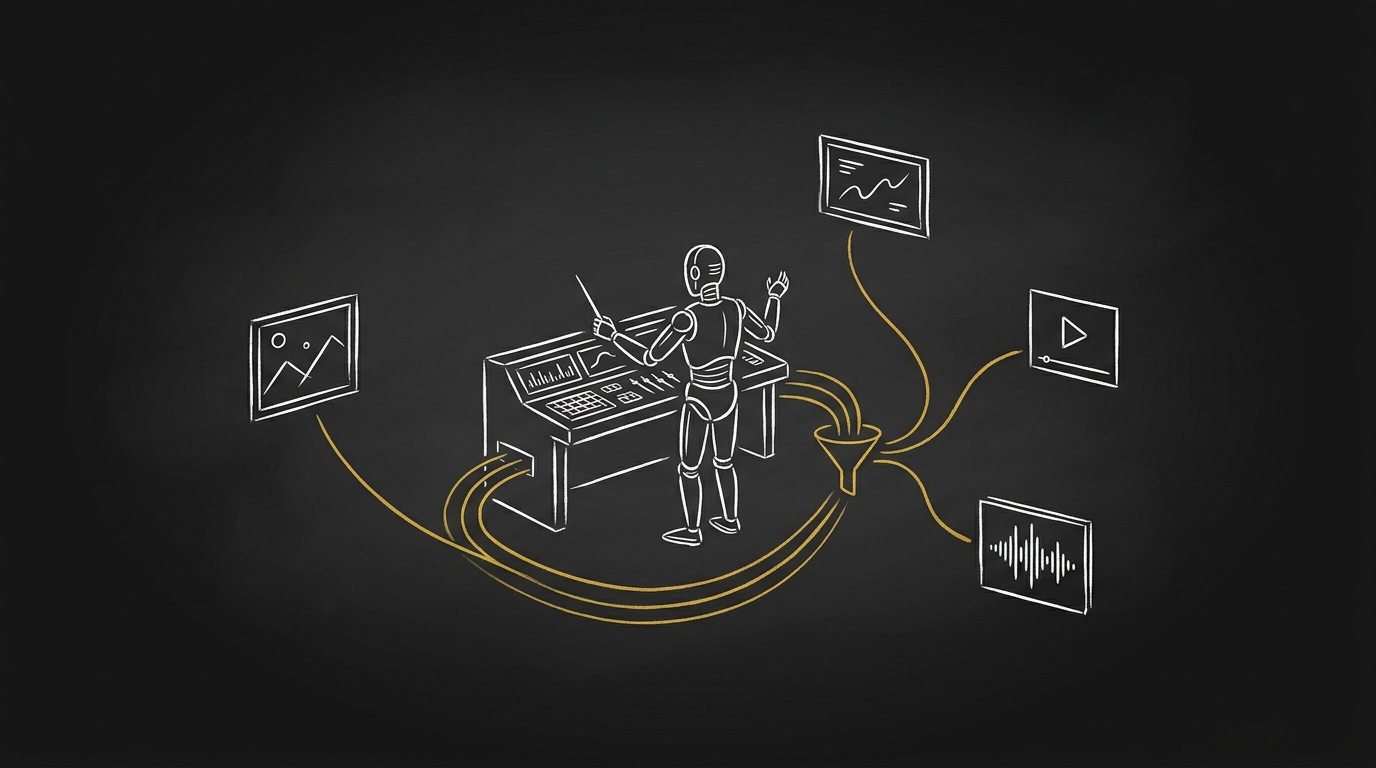
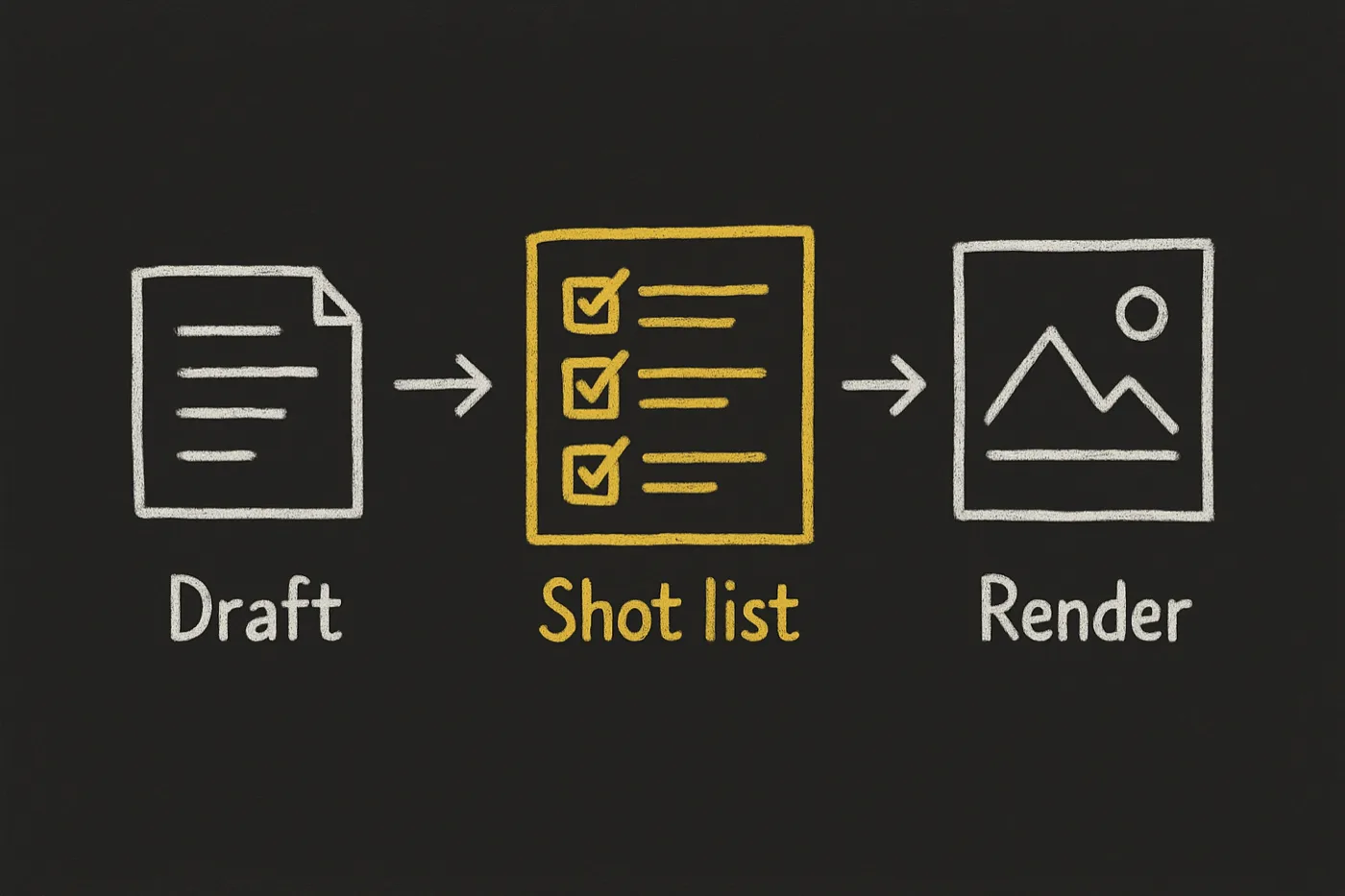
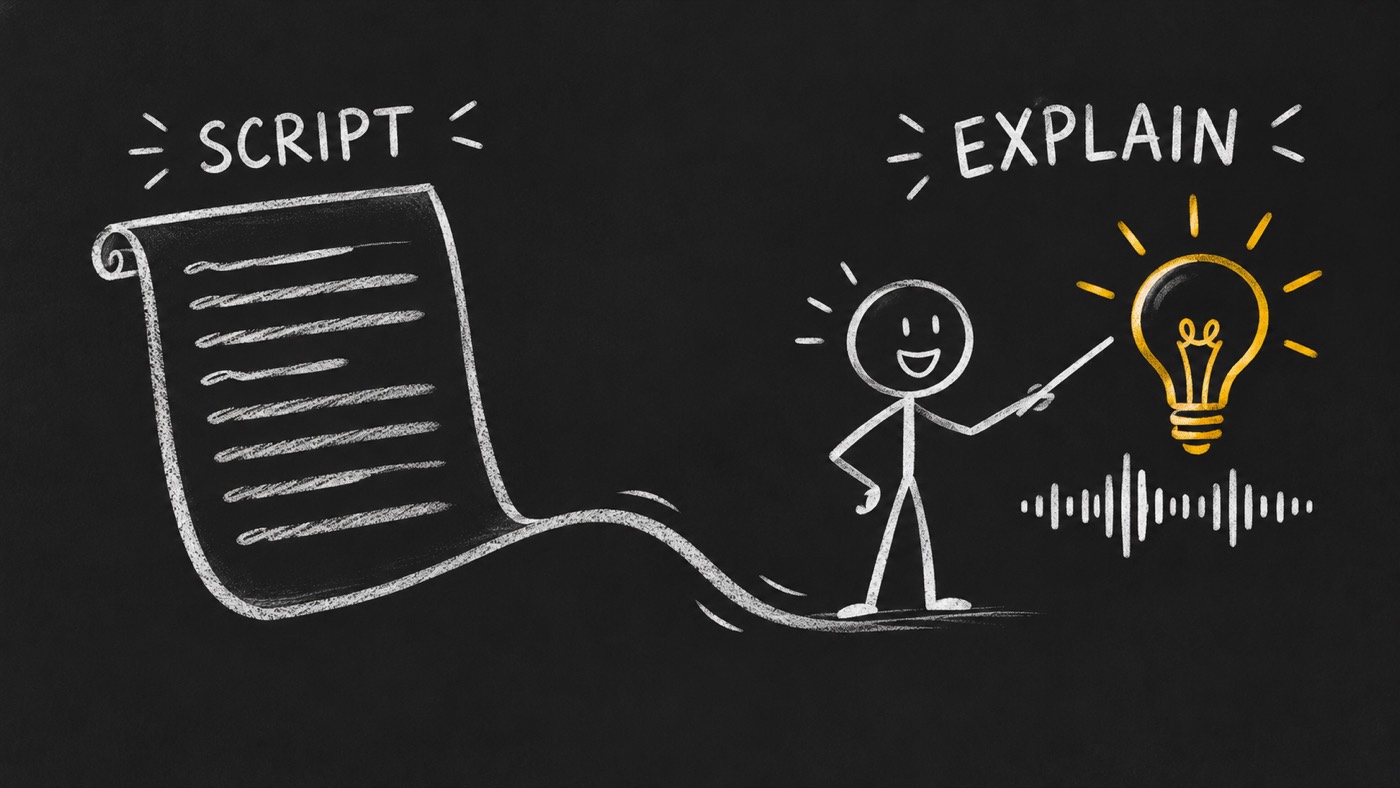
Turn your approved script into a narrated chalkboard explainer for a tutorial or product walkthrough. I use this guidance to connect the words, reusable drawings and camera beats before the full render. Five recipes take your agent through the script brief, illustration layers, animation planning, audio and delivery review. Five local checks examine assets, scene plans, project inputs, motion assertions and narrated acceptance. For a product lesson, start with the one idea the viewer needs to understand. Approve the spoken words, record the voice and measure its timing. Prepare a clean board plate, complete poses and separate props. Then plan the camera around each change in meaning. The guidance hands image work to media-generator, shot lists to video-director, animation to HyperFrames and final assembly to video-editor. You supply licensed audio, fonts and human review. The checks do not certify anatomy, pronunciation or storytelling. Silent studies stay labelled separately from narrated delivery. A hired-agent test remains due when a product carries the skill; no production-time benchmark is claimed. This patch adds a local layer extraction tool, so baked scene drawings become transparent layers without new image generation, and the delivery check now accepts both pronunciation map shapes.
Features4
Review the brief and recorded voice before final animation timing.
Separate the board plate, complete poses and independent props.
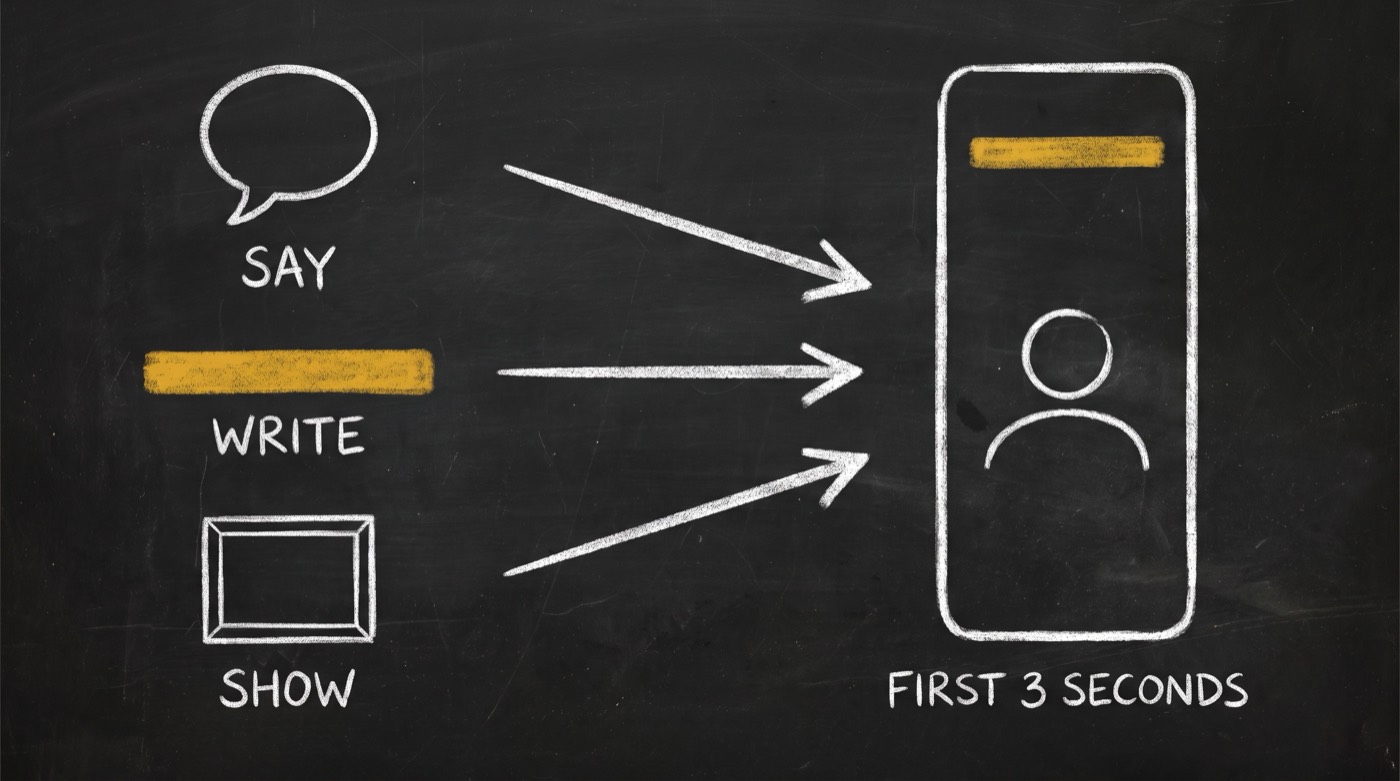
Tie each target and framing choice to what the viewer needs to learn.
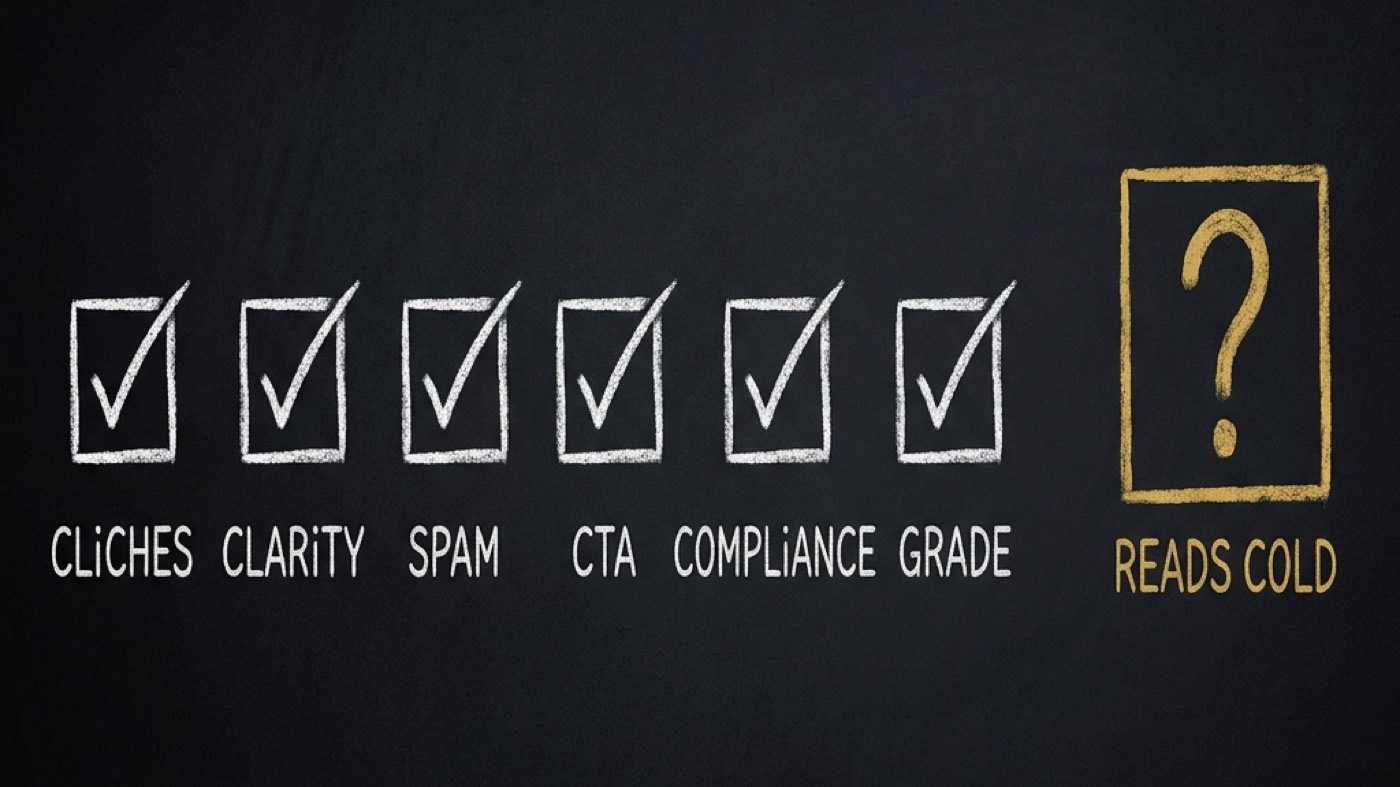
Check speech, subtitles and audio; label silent studies separately.
Videos1 video
DemoChalkboard Explainer · Demo video
Demo · SpiderMediaArticles about Chalkboard Explainer1 article
Videos1 video
DemoChalkboard Explainer · Demo video
Demo · SpiderMediaArticles about Chalkboard Explainer1 article
Showing all 1
SKILL.mdthe file your agent reads
SKILL.md loads when you open this tab.
What's new4 releases · newest first · from the package's CHANGELOG
v0.1.32026-11-10Latest
Marketplace listing update: added the launch explainer film (`media.demo_video_url`). No code, schema, copy or guidance changes; hero and screenshots unchanged from 0.1.2.
v0.1.22026-11-03
- New `scripts/extract-layers.py`: cuts transparent layers from one baked scene illustration with
  no image generation. Local board estimate (not a constant colour), contour alpha with cleaned
  edge colours, optional opaque fill, box-cut warnings, auto-detection of connected chalk regions,
  an approximate board plate, a merged asset manifest and a checkerboard contact sheet.
  Pillow + numpy only (no scipy). Its layers pass `verify-layer-assets.py`.
- Recipe 02 now starts with local extraction; image generation is the fallback for parts a baked
  scene cannot give (empty hands, new poses, hidden parts).
- `verify-delivery.py` accepts the pronunciation map in list form
  (`{"aliases": [{"display": ..., "spoken": ...}]}`, also `entries` / `spoken_alias`) and flat form
  (`{display: spoken}`). It crashed on the list form before. A malformed map now fails with its
  reason. Display names that start or end with a symbol (`@scope/name`) now match.
- Recipe 03: renders run one at a time per machine with 10 workers, through the film factory's
  `scripts/render-picture.sh` when the factory drives the film; `hyperframes check` must see the
  real user cache, not an identity HOME's empty `.cache`.
- Declare numpy in `scripts/requirements.txt`.v0.1.12026-10-31
- Add a reference-anchored hero and three explanatory marketplace panels.
- Refresh buyer-facing description and feature copy.
- Keep all five workflows and all five check scripts unchanged from 0.1.0.
v0.1.02026-10-30
- Package the existing five chalkboard workflows as tenant-neutral guidance; use the brand's
  board, approver, libraries and output paths. Declare live peers and licensed-audio requirements.
- Fix the three false passes: missing board plate, unknown camera action and empty project pack.
- Fix three further defects: composite pixels are executed and decoded with errors reported;
  moving cameras require target/framing; pack siblings resolve from the script folder and
  forbidden pure black fails. Controls cover both missing camera fields separately.
- Align alpha and camera timing checks with the existing recipe contracts; declare Pillow and
  distinguish structural preflight from final visual and broadcast verification.

### Experiential review e3 — supersedes the initial ship check

- [01] Put approved voice, measured speech/captions and timed beats before final animation; label silent prototypes.
- [02] Require a brand-approved pronunciation map and contextual audition; keep the Di-Atomic alias as a deployment example only.
- [03] Select/reuse/recreate assets by action; distinguish reference recreation, static cutouts and articulated rigs; add board/size/contact review.
- [04] Replace alpha-percentage quality floors with occupancy diagnostics, justified exceptions and visual acceptance.
- [05] Replace unsupported motion JSON with installed-0.8.212-validated kind/selector assertions and require enabled runtime sampling.
- [06] Make camera bands advisory with timing reasons; accept the real 1.55s follow with a warning.
- [07] Add a complete multi-beat contract/example, candidate reading defaults and intermediate/phone collision diagnostics.
- [08] Correct music gain/LUFS arithmetic, delegate stem/envelope routing and label audio settings as untested starting points.
- [09] Add strict narrated acceptance for silence, speech/SRT fit, both runtimes/variants, final LUFS/peak, warnings and listening review; retain silent-study mode.
- [10] Define clean master as no burned-in subtitles while retaining explanatory text/graphics.
- [11] Replace recursive literal scanning with a limited background-source lint and separate rendered texture inspection.
Showing all 4